
Okay, so check this out—I’ve been poking around Solana explorers for years. Whoa! The early days were clunky and slow. My instinct said something felt off about every explorer that pretended to be simple but hid complexity. Initially I thought speed would be the deciding factor, but then I realized visibility and context matter more for day-to-day use.
Seriously? Yes. For traders, devs, and curious users, raw speed only gets you so far. Medium-level tools that explain what a transaction actually means are the real winners. On the Solana side, that means giving users a way to see token flows, program interactions, and the subtle signals of bot activity without forcing them to be blockchain engineers. I’m biased, but UX matters a lot here.
Here’s what bugs me about many explorers: they show data, but not stories. Hmm… that’s a weird way to put it, but there you go. You want to know not just “what happened” but “why it likely happened”—or at least have affordances that let you figure that out quickly. On the other hand, too much interpretation and you’re nudging users toward incorrect assumptions. So there’s a balance.
What a Practical Explorer Needs
Short answer: clarity, context, and trust. Really. Those three, in that order. Clear transaction timelines help you trust the data. Contextual notes let you see whether a transfer was a swap, liquidity add, or a program-mediated distribution. Trust comes from transparency—verifiable links to confirmed blocks, timestamps, and human-readable token labels.
For everyday Solana activity that I actually care about—trades, stake changes, NFT transfers—it’s vital to have decoded instructions. Medium-length decoding saves me time. Long, raw logs? Ugh. They are necessary sometimes, but a good explorer parses them into actions. Initially I thought raw logs should be primary, but then I realized users want layers: raw logs underneath, friendly labels on top.
Try to picture this: you’re in New York, trading during lunch, and you see an odd drop in token balance. You want the explorer to answer the obvious questions fast—who initiated that transfer, what program executed it, and whether it looks like an airdrop, a swap, or a rug. If the tool takes too long to surface that, you lose the moment.
Why I Recommend solscan for Most Users
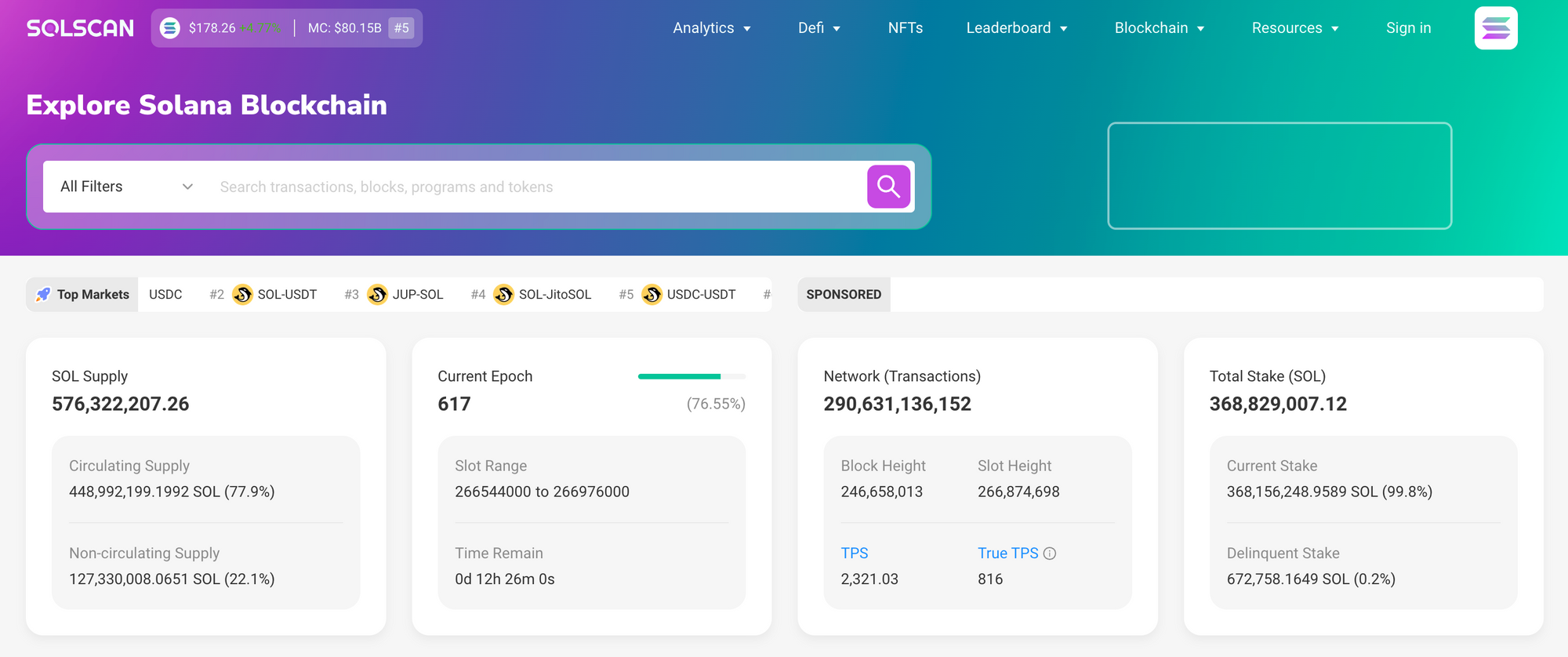
Okay—I’ll be honest: I use solscan a lot. Not all the time, and not exclusively, but it’s my fallback. Seriously. My first impressions were pragmatic; speed grabbed me, but the decoded instruction view kept me. On one hand, it’s not always perfect. Though actually, wait—let me rephrase that—it’s usually accurate for common programs, and when it misses something, the raw data is still there to inspect.
solscan gives a neat mix of developer-oriented data plus user-friendly presentation. The token transfer tables, instruction decodes, and signature tracing are clean. Something I appreciate: the ability to jump from a wallet to its recent transactions and then trace individual instruction flows across programs without opening new, confusing tabs every few seconds.
My instinct said it would be another pretty front-end. It wasn’t. There are helpful affordances for suspicious transfers, and the search is fast enough that I can look up multiple signatures while on a call. That convenience matters. I’m not 100% sold on every UX decision they make, but the overall toolset is strong.
Digging into SOL Transactions: What to Watch For
Transactions on Solana are compact and sometimes cryptic. Short bursts of activity can correspond to a dozen program calls. Hmm… that can be misleading if you only skim the first few lines. So, look deeper. Watch the “instructions” section to see which programs were touched and in what order. That order matters.
Pay attention to the fee payer and rent-exempt account creations. Small SOL flows that accompany token movements often indicate account creation or program-specific rent payments. On the other hand, large SOL transfers with no program calls are usually simple wallet-to-wallet moves. Initially I thought fees would always reveal bot behavior, but actually fees are noisy signals, and context is everything.
If you suspect a swap, check which token accounts changed balances. Decoding the program instruction usually shows whether Serum, Raydium, or a DEX aggregator did the heavy lifting. And if an instruction touches a program you don’t recognize, that could be a custom smart contract—time to be cautious. Something felt off about a few NFT mint flows recently; the decoded instructions helped me spot an obfuscated royalty redirect.
Advanced Tracing: Following a Signature Like a Detective
Here’s the thing. You can follow a transaction signature and learn a lot. Really. Start at the signature, then open each instruction’s pre- and post-states. See which token accounts changed. Note program IDs. If you care about provenance, trace the originating instruction back to the funding addresses.
On one occasion I traced a suspicious airdrop back to a contract that was aggregating small balances from multiple accounts. That discovery prevented a few calls to support and saved someone from paying unnecessary fees. I’m biased toward traceability, and this is why. But keep in mind: complex transactions might involve cross-program invocations that only make sense if you understand specific contract designs.
Pro tip: use the decoded instruction view to look for common patterns—’initialize_account’, ‘transfer’, ‘swap’—and then verify with raw logs if something seems off. I say “verify” but really it’s more like “double-check,” because sometimes the decode layer simplifies things in ways that hide subtle conditional logic.
Where Explorers Still Fall Short
Not everything is perfect. Shortcomings exist. For starters, decoding for niche and new programs is often lagging. Medium-length support documentation helps, but it’s incomplete. Some explorers lean heavily on heuristics to label transactions, which can mislead less experienced users.
Also, UX inconsistency across explorers troubles me. One explorer might label a program ID with a friendly name, while another shows only the raw ID. That mismatch creates cognitive friction. And here’s a very local gripe: on slow café Wi‑Fi, heavy pages with lots of JavaScript load poorly. I wish explorers offered a light, text-first mode for quick checks—like how a news site sometimes has reader mode.
Finally, privacy-preserving features are missing. Lots of users don’t want their wallet links cached in public search history. Some explorers provide incognito-like features, but not many. I’m not 100% sure how that should be handled, but it’s an unsolved problem worth attention.
Practical Workflow I Use
Simple workflow. First, search the signature. Then glance at the summary line. Next, check instruction decodes and token balance changes. If there’s ambiguity, open raw logs. If I need to build a case, I trace prior and subsequent transactions for involved addresses. Usually I can form a hypothesis within a couple of minutes.
This workflow is repeatable and it scales for audits and casual checks. On heavy forensic days I switch to program-specific tools and RPC logs. But for most things—like suspicious transfers, airdrops, or verifying a swap—an explorer like solscan gives what I need fast.
FAQ: Quick Answers
How do I verify a SOL transaction is final?
Check the confirmation status and the block hash. If a transaction shows “finalized” that’s the strongest indicator. Also compare the timestamp with network blocks to confirm it landed in the expected slot. If the transaction is only “confirmed,” wait for finalization before making consequential decisions.
Can I decode program instructions for every transaction?
Mostly yes for common programs. Decoding relies on known program schemas, so novel contracts may not be human-friendly. When a decode is missing, inspect pre- and post-state values plus raw logs. That usually tells you enough to infer the action, though it can be tedious.
What’s the fastest way to spot a bot or wash trade?
Look for rapid repeated interactions between a small set of addresses, tiny fee patterns, and consistent timing intervals. Also check if program IDs match known market makers or aggregator bots. These signals are circumstantial, so corroborate with more data before drawing conclusions.
Alright—closing thoughts. I’m excited about Solana’s explorer ecosystem because it shows the chain maturing. Seriously. Many explorers are iterating quickly, and user-centered features are arriving faster than I expected. Something I keep worrying about (and this part bugs me) is the trade-off between helpful interpretation and misleading simplification.
Look, no single tool is perfect. Use solscan for everyday visibility, cross-check with other explorers for edge cases, and keep raw logs in your toolkit for the weird stuff. I’m not 100% sure every user needs to learn raw logs, but basic familiarity keeps you safer. Stay skeptical, and trust your tools—carefully.